Prep: 15 min Cook: 30 min Serves: 4 Level: Moderate
Kimchi Jjigae (Korean Kimchi Stew)
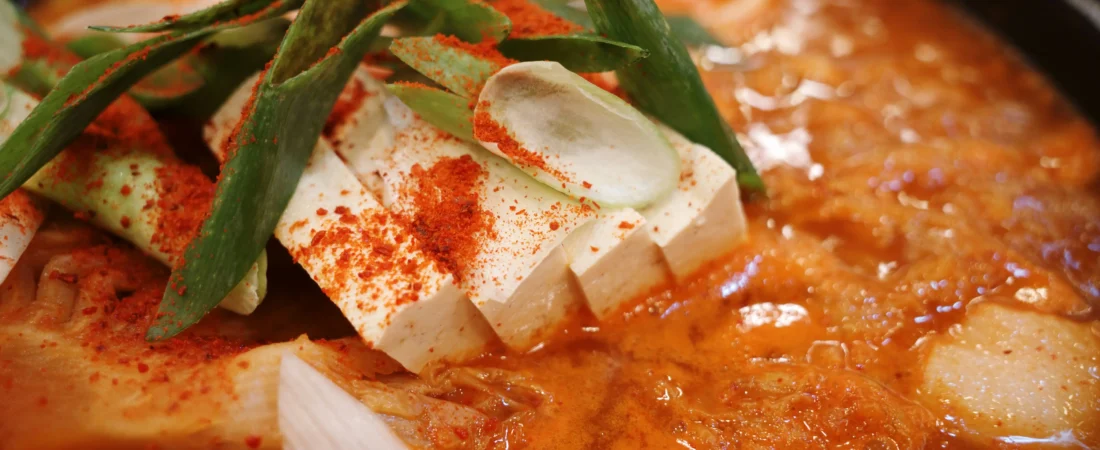
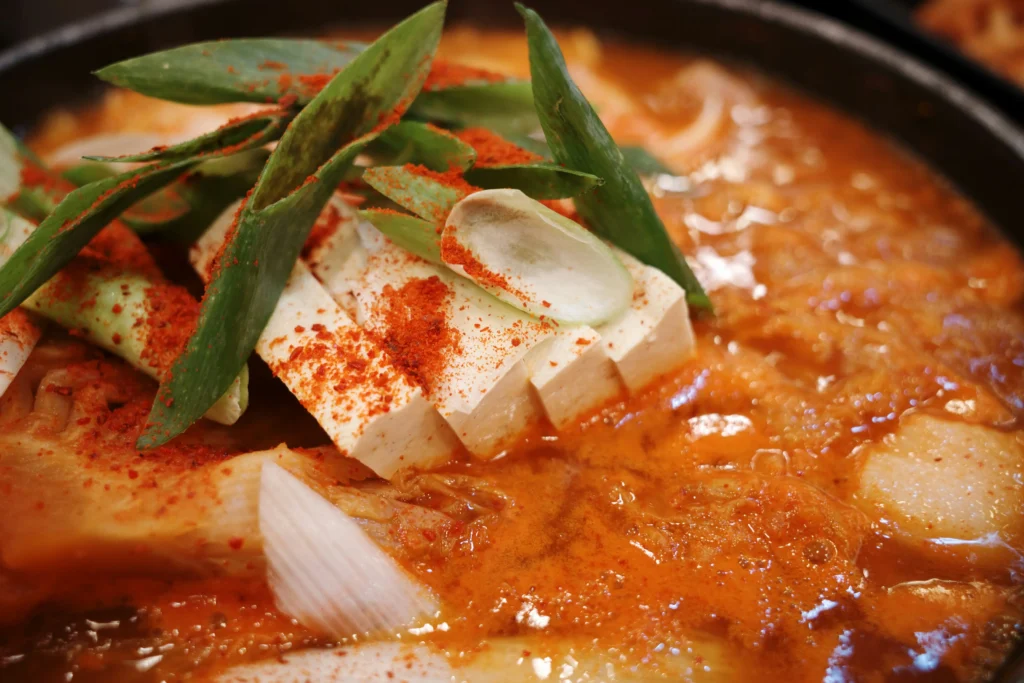
Kimchi Jjigae is a classic Korean stew made with deeply fermented kimchi, pork, tofu, aromatics, Korean chili flakes, and a savory broth. It is one of those dishes that transforms a handful of humble ingredients into something incredibly rich, warming, and satisfying.
I especially love this dish because the flavor is bold and layered, with a combination of spicy, sour, savory, and slightly sweet notes. Also, just because I used to eat it often when I was young; and I am sure, most of the Koreans did as well, it is Koreans’ soul food.
Ingredients:
- 2 cups well-fermented kimchi, roughly chopped
- 200 g pork belly, thinly sliced
- ½ cup kimchi juice
- 1 tablespoon toasted sesame oil
- 3 cloves garlic, finely minced
- 1 teaspoon fresh ginger, finely grated
- 3 green onions, sliced, with the white and green parts separated
- 1 tablespoon gochugaru (Korean chili flakes)
- 1 tablespoon gochujang (Korean chili paste)
- 3 cups anchovy broth or water
- 300 g firm tofu, sliced
- 1 tablespoon fish sauce
- ½ teaspoon sugar, optional
- ½ small onion, thinly sliced
- Salt, to taste
Substitutions
For a vegetarian version, replace the pork with firm tofu and add mushrooms if desired. For a vegan version, use vegetable broth and soy sauce instead of anchovy broth and fish sauce, and make sure the kimchi and gochujang contain no seafood.
Cooking Instructions
Step 1: Prepare the Ingredients
Roughly chop the 2 cups fermented kimchi and reserve ½ cup kimchi juice. Thinly slice the 200 g pork belly, ½ onion, 300 g tofu, and 3 green onions. Mince the 3 garlic cloves and finely grate the fresh ginger. Keep the white and green parts of the scallions separate because they will be added at different stages.
Step 2: Render the Pork
Place a heavy-bottomed Dutch oven or large pot over medium heat. Add 1 tablespoon toasted sesame oil and the sliced pork belly. Cook for about 3–4 minutes, stirring occasionally, until the pork begins to brown and its fat starts to render into the pot. The pork does not need to be fully cooked at this stage. The goal is to release its flavorful fat and lightly brown the edges.
Step 3: Sauté the Aromatics and Kimchi
Add the minced garlic, grated ginger, sliced onion, and the white parts of the green onions. Cook for about 1 minute until fragrant. Add the 2 cups chopped kimchi and stir everything together. Cook for 5–7 minutes, stirring regularly, until the kimchi becomes softer, glossier, and slightly translucent. This is an important stage because cooking the kimchi before adding the broth helps develop a deeper and more rounded flavor.
Step 4: Add the Korean Chili Ingredients
Add 1 tablespoon gochugaru and 1 tablespoon gochujang to the pot. Stir continuously for about 1 minute, allowing the chili flakes and paste to coat the pork and kimchi. Be careful not to let the chili ingredients burn. If the bottom of the pot becomes too dry, move quickly to the next step.
Step 5: Build the Broth
Pour in 3 cups anchovy broth or water and the reserved ½ cup kimchi juice. Add 1 tablespoon fish sauce and stir well to combine. Bring the stew to a rolling boil over medium-high heat. Once boiling, reduce the heat to medium-low and cover the pot.
Step 6: Simmer the Stew
Allow the Kimchi Jjigae to simmer for 15–20 minutes. During this time, the pork becomes tender, the kimchi continues to soften, and the rendered pork fat combines with the kimchi juice and broth to create a richer, more cohesive soup. The broth should become a deep reddish-orange color, while the kimchi should look soft and tender rather than firm and crunchy.
Step 7: Add the Tofu
Remove the lid and taste the broth. If the kimchi is extremely sour, add ½ teaspoon sugar to balance the acidity. If more saltiness is needed, add a small amount of additional fish sauce or salt. Gently arrange the 300 g sliced tofu over the top of the stew and simmer uncovered for another 5 minutes. Avoid stirring too aggressively so the tofu remains intact.
Step 8: Finish the Stew
Add the green parts of the green onions and allow the stew to simmer for another minute. Serve the Kimchi Jjigae immediately while it is piping hot and bubbling, ideally with freshly steamed short-grain white rice.
Nutritional Information Per Serving
Approximate values will vary depending on the kimchi, pork belly, broth, and brands of gochujang and fish sauce used.
- Calories: 400–450 kcal
- Protein: 22–26 g
- Carbohydrates: 15–20 g
- Fat: 27–31 g
- Fiber: 3–5 g
Equipment & Tools
- Heavy-bottomed Dutch oven or large pot
- Sharp chef’s knife
- Cutting board
- Microplane or fine grater
- Wooden spoon or spatula
- Ladle
For a more traditional Korean presentation, you can cook and serve the stew in a ttukbaegi, a Korean earthenware pot. It retains heat exceptionally well and keeps the jjigae bubbling at the table.
Cooking Tips & Notes
Use Aged Kimchi
The most important rule for great Kimchi Jjigae is to use well-fermented kimchi. Fresh kimchi contains less developed acidity and complexity, while older kimchi provides the deep sourness that gives this stew its characteristic flavor.
Don’t Skip the Kimchi Sauté
Adding the broth too early can result in a lighter, flatter-tasting stew. Sautéing the kimchi with the pork and aromatics first allows its flavors to become deeper and more concentrated.
Serving Suggestions & Pairing Guides
Kimchi Jjigae is traditionally served with steamed rice, which provides the perfect mild contrast to the spicy and sour stew.
Side Dishes
For a traditional Korean-style meal, serve the jjigae with:
- Steamed short-grain white rice
- Seasoned bean sprouts (Sukju Namul)
- Korean rolled omelet (Gaeran Mari)
- Simple cucumber salad
- Other mild Korean banchan
Garnishes
Finish the stew with:
- Sliced green onions
- Toasted sesame seeds
- A few thin slices of fresh chili
- A small drizzle of toasted sesame oil
Beverages
A cold Korean lager pairs naturally with the bold flavors of Kimchi Jjigae. For a non-alcoholic option, unsweetened barley tea is an excellent choice. Its clean, roasted flavor helps refresh the palate between bites.
FAQ
Why is my Kimchi Jjigae too sour?
Very old kimchi can sometimes produce an intensely sour broth. Add ½ teaspoon sugar at a time, tasting between additions. The goal is to soften the sharp acidity without making the stew sweet.
Why does my broth taste watery?
The stew may need more simmering time, or the kimchi may not have been fermented enough. Simmer the jjigae uncovered for another 5–10 minutes to allow some liquid to reduce.
Adding a little extra kimchi juice or fish sauce can also strengthen the flavor.
Can I use fresh kimchi for Kimchi Jjigae?
Yes, but the result will be milder and less complex. Well-fermented, sour kimchi is strongly preferred because it gives the stew its characteristic depth and acidity.